
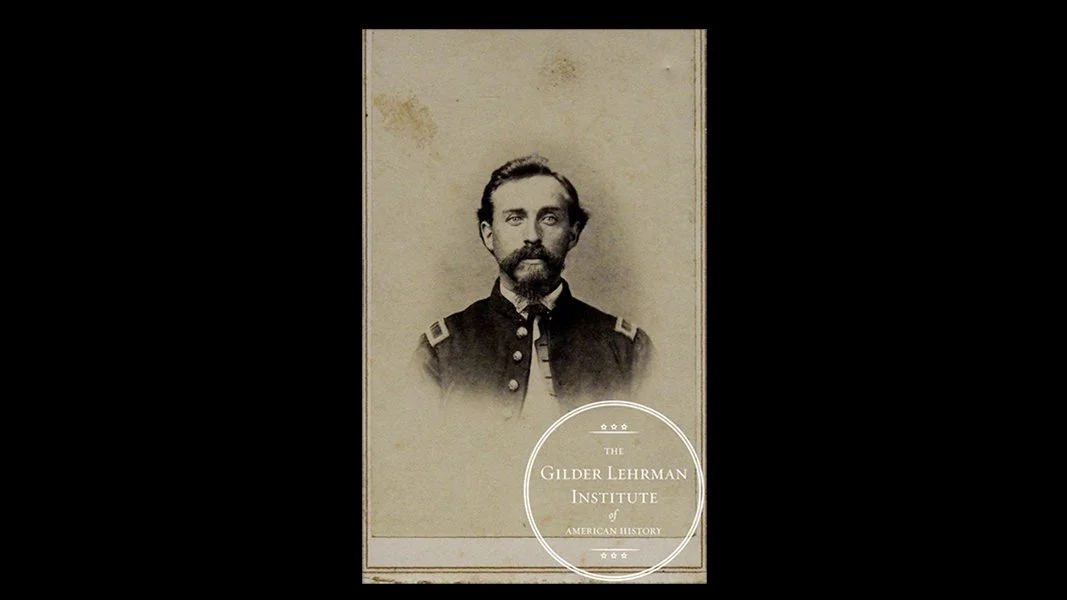
I have a digital “stack” of draft reservation cards of members of my family, but none of these relatives ended up serving. One who did goes back to the Civil War and wasn’t a draftee but a volunteer.
If you dig into your family history, you will find fascinating life stories, no matter how ordinary you think your ancestors might have been. Captain William Herring, my grandfather’s great-grandfather, is one of the best examples I’ve found in mine, from his birth in modern-day Poland in 1828 to his murder in his rural Ohio backyard in 1891.
It took some digging to find him. One of the most exciting moments in my search came just this last summer when I discovered an image of my ancestor in the digital collections of the Gilder Lehrman Institute of American History. Specifically, he appears in the institute’s cartes de visite of officers of the 59th US Colored Infantry, organized in LaGrange, Tennessee, shortly after Emancipation.
He was born Wilhelm Herring in Brandenburg, Prussia, in the far west of Poland today. Captain Herring, a miller by trade, left Europe from Bremerhaven at the age of 28 and arrived in Philadelphia in 1857 amidst a financial panic. By 1859 he found his way to Richland County, Ohio, near Mansfield. He married that year and moved with his new wife, Anna Maria Keinath Herring, further west in Ohio to another large German community.
On this very day, November 11, 1861, two weeks after the birth of his and Anna Maria’s first child, he left for Columbus to join, belatedly, a unit of volunteers organized in October.
He served in the infamous Battle of Shiloh in the spring of 1862, followed by a long period of guard duty along the Memphis & Charleston Railroad. In May 1863, he was reassigned to begin recruiting formerly enslaved soldiers to form the 59th Regiment.
The Regiment of Black soldiers commanded by white officers would clearly not meet modern standards of racial progressivism, but at the time enraged former slaveowners and was seen by many contemporaries as a display of confidence in the capabilities of Black men—or at least greater confidence than most white citizens had. Confederate officers responded to the recruitment of Black soldiers by making it clear that there would be no mercy afforded to any white man leading such a unit.
For Captain Herring, the assignment was a promotion. For that reason, I can’t assume this assignment is any evidence of racial enlightenment by 19th-century American standards. But there’s evidence from his trail both before and following his service to suggest it might have played a role.
In 1864, Captain Herring was captured during the Battle of Brice’s Cross Roads. Although the Confederate forces didn’t as a rule make good on their most dire threats, he suffered crowded conditions, poor sanitation, disease, malnutrition, and possibly some degree of torture for nine months before his release in February 1865.
For all that, he was able to return to western Ohio and continue to raise a family that included my great-great-grandmother and his namesake, Wilhelmine Herring, born in 1870.
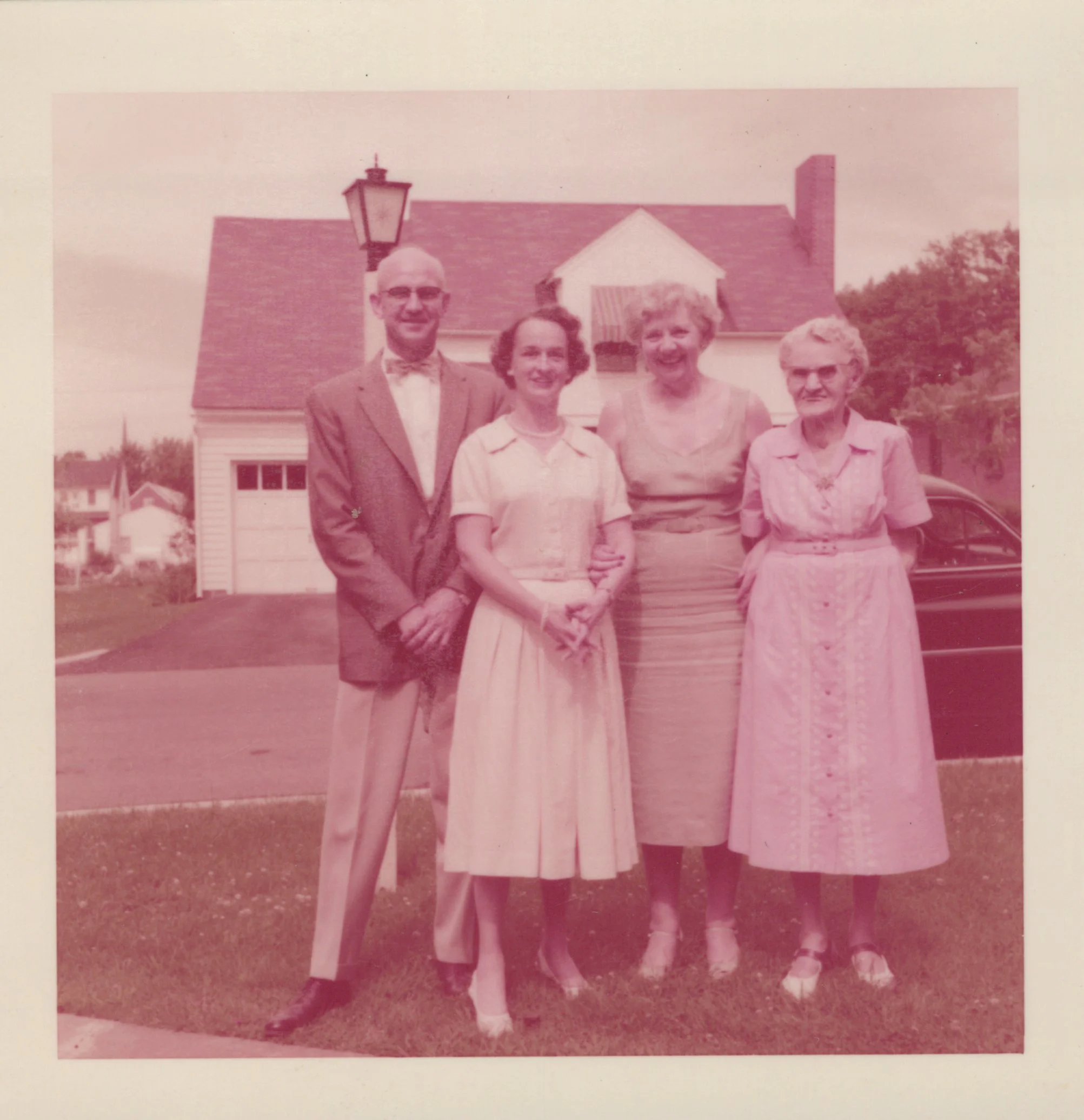
A family photo from 1953. Captain Herring’s daughter, Wilhelmine (right), married into the McCally family and is recalled faintly by my father as “Minnie McCally.” From the left are my grandparents Charles (Minnie’s grandson) and Jean McCally, aka “Grandpa Chuck and Nana Jean,” and my grandfather’s Aunt Alice. That we never knew Minnie’s family’s story through any conversations with family members is a painful lesson about the importance of recording family stories before it’s too late.
A letter from Herring to his fellow officers appears in A Brief Sketch of the Organization and Services of the Fifty-Ninth Regiment of United States Colored Infantry: And Biographical Sketches, published by the regiment’s commander, Robert Cowden, in 1883.
ST. JOHNS, AUGLAIZE CO., O., Jan. 13, 1879.
Dear Comrades and Friends: I agree with Colonel Cowden’s plan of a reunion June 11th at Indianapolis as a fifteenth anniversary of Guntown [Battle of Brice’s Crossroads] also as the fifteenth anniversary of my being taken prisoner of war. I feel the effects of the prison-dens more every day I live, for I am troubled a great deal with inflammatory rheumatism in my shoulder, which I believe I got when I was a prisoner at the different places; namely, Cahara, Ala., Millen, Ga., Florence, S.C. and Goldsborough, N.C. However, I would not take a good farm for what I have seen, and would not take two farms and see over again what I did see. After I was mustered out of service I located in St. John’s, Ohio, and engaged in my professional business of milling, and labored hard to make a good living. I have a good home, wife, and six children—five girls and one boy. My wife and two oldest girls are well known to you all, as they were with me four months—two months at Memphis, Tenn., and two months at Corinth, Miss. Anna M., eighteen years, is married to a farmer near St. Johns, Ohio; Pauline A., seventeen years; Henriette C.L., ten years; Wilhelmine E.M., eight years; Martha E., six years; the boy’s name is Philip Frederick William Herring, four years old. If it is possible I will meet you all at a reunion, whenever and wherever it may be held. Would be glad to see and hear from you all.
I remain yours truly.
WILLIAM HERRING.
In the late 1880s, Captain Herring was made postmaster of Auglaize County, a political appointment that placed him in a special role at the social and economic hub of his community in St. Johns. In the early morning hours of September 21, 1891, he stepped outside his house to investigate some unfamiliar sounds coming from his chicken coop. A bullet struck him in the chest, wounding him fatally. His body was discovered by his family—in some reports by his wife and in others by his son. In the days and weeks that followed, speculation settled in and played out in the local newspapers. Was he killed by would-be thieves? Or was his murder a form of political retribution against a man campaigning for the local dry option? The mystery was never solved.
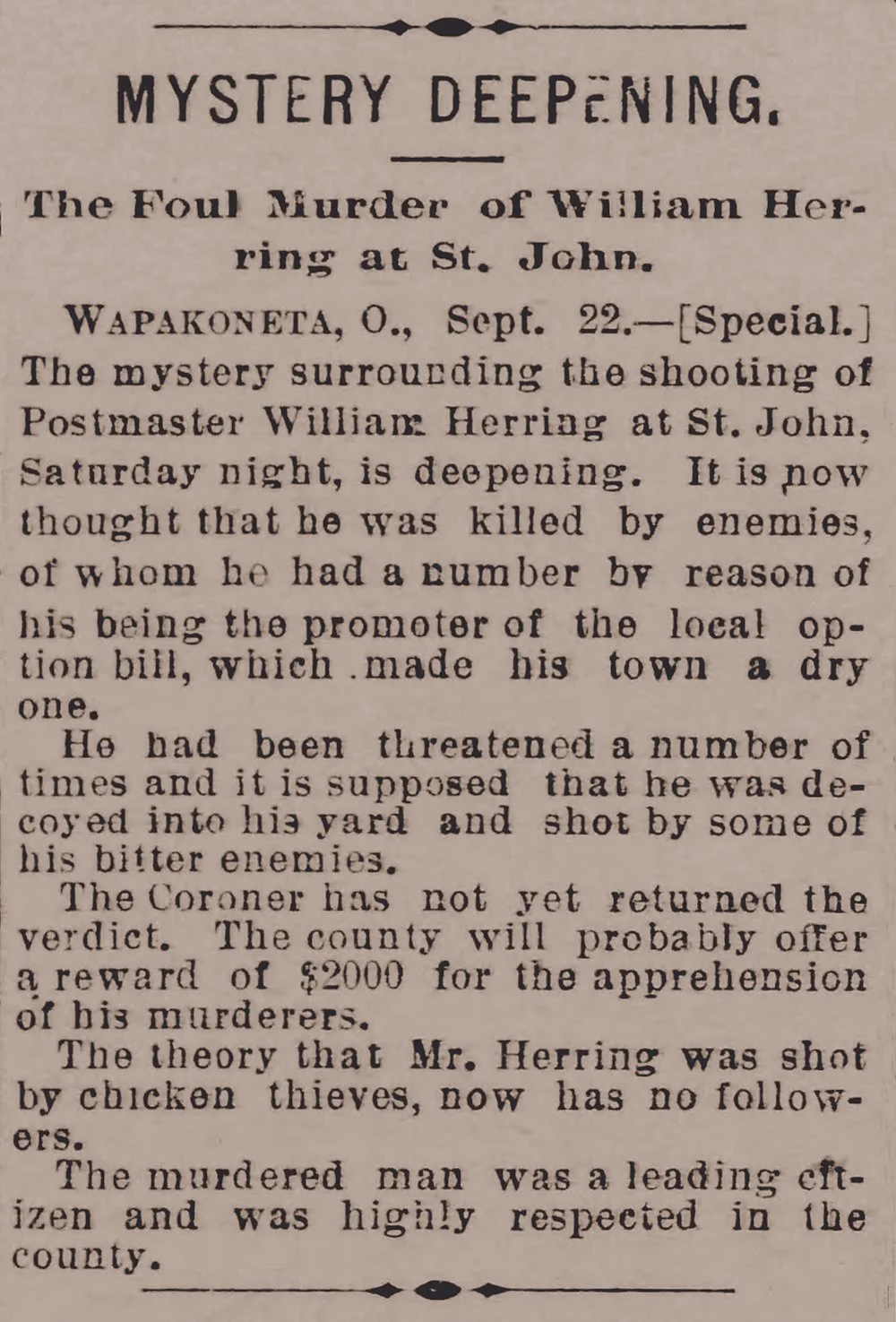
Cincinnati Post, September 22, 1891, p. 2. Original image accessed through Newspapers.com.